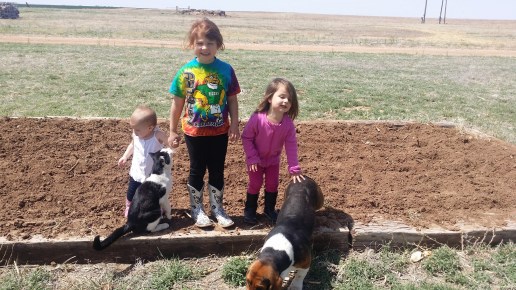
I love to plant a large garden each year. As spring slowly approaches, I have started planning out how I want to change up my garden for this year. Over the last few years, I have had to learn by trial and error the best methods. Some of my plants, such as tomatoes, squash, and jalapenos, have really thrived. Others, such as my corn, have struggled for some reason. When it comes to planting a garden there is a very important balance of planting the right seeds at the proper time, making sure the seeds get enough water (which is a constant battle in the panhandle of Texas), and keeping the weeds from taking over.
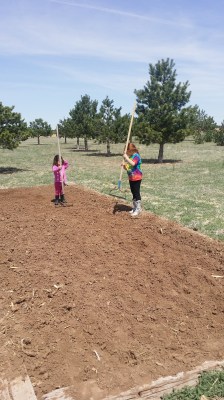
The first year my daughters and I planted our garden they were super excited and extremely unhelpful (lets just say the rows were far from straight and while we were planting I had to finally kick them out of the garden because they were digging up seeds almost as quickly as I put them in the ground). However, they were so eager to eat the cucumbers and watermelons that the next morning they wanted to go see the garden. Needless to say, they were a bit disappointed that nothing had grown. They didn’t understand how long it takes for plants to emerge from the ground, and how it takes even longer to bear fruit. Those seeds had to get roots established deep into the ground before they could start growing upward.
It is the exact same in our spiritual lives. Just like a seed, our faith must take root deep within our being before any fruit will show on the outside. The process of developing those roots may sometimes be unpleasant. After all, a seed has to be buried, put under pressure, and essentially die to the way that it currently is in order to grow and bear fruit. Some fruit is pretty quick and very abundant. For example, in my own garden zucchini is very easy to grow and extremely abundant, but strawberries do not bear much fruit their first year. Sometimes it’s like that spiritually. Some of the fruit of the spirit seems to come easily, for me hope and faith. On the other hand, it seems like the fruit of patience is one of those that has been a lot more of a difficult fruit to grow.
So many examples that Jesus used in his parables were related to agriculture. He referred to believers in the parable of the farmer scattering seed (Mark 4) about how easily it is for us to allow the Word of God to be of no effect in our lives. For some it gets snatched up almost as soon as they hear it. For others it starts to sprout but because the root system is underdeveloped (meaning they don’t let the word sink into their actual lives and it quickly becomes unimportant as they listen to the world). Still others start to develop a good root system but then hit a hard time or let the worries of this world get to them so their faith dies out. Finally, there is the fourth group that were considered fertile soil where the word produced a bountiful crop.
We are to strive to be that fourth group. In the world we live in, that is no easy task. However, if we can keep in the Word on a daily basis (not just once a week on a Sunday when someone else is spoon feeding us), those roots will start to take off. After all, if there are no roots, there can be no fruit. I pray that as I grow in maturity, I will grow that 100 fold crop that Jesus refers to in Mark 4. I pray you will too!



 Becki Koepke